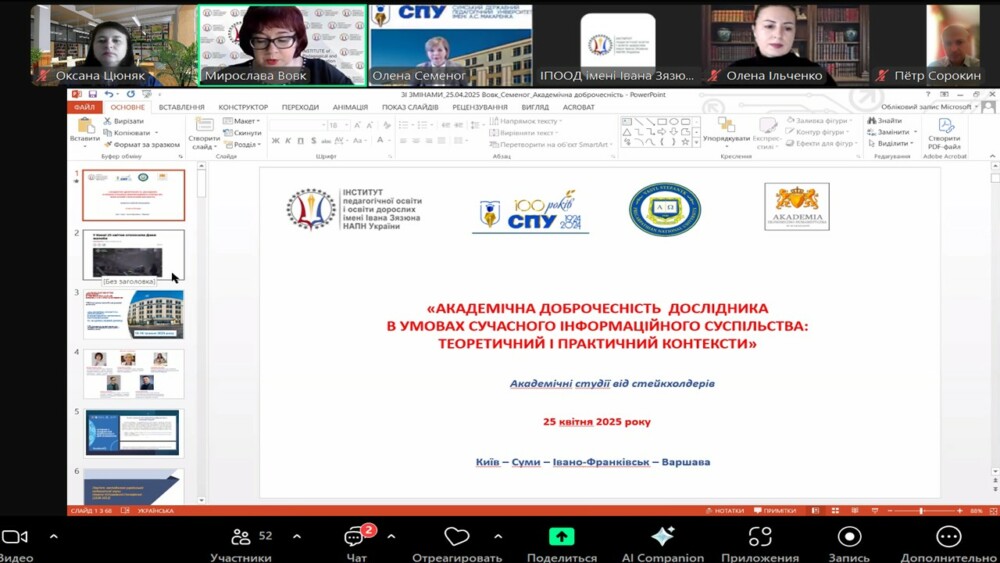
As part of the implementation of the content of educational and scientific programs, an interregional lecture-polylogue was held on the topic “Academic integrity of a modern researcher in the conditions of a modern information society: theoretical and practical context” for future doctors of philosophy.
Speakers:
-
Myroslava Vovk — Doctor of Pedagogical Sciences, Professor, Corresponding Member of the National Academy of Sciences of Ukraine, Head of the Department of Content and Technologies of Pedagogical Education of the Ivan Zyazyun Institute of Pedagogical Education and Adult Education of the National Academy of Sciences of Ukraine;
-
Olena Semenog — Doctor of Pedagogical Sciences, Professor, Professor of the Department of Pedagogy, Head of the Center for Scientific and Educational Partnership and Network Interaction of the Sumy State Pedagogical University named after A. S. Makarenko;
-
Oksana Tsiunyak — Doctor of Pedagogical Sciences, Professor, Professor of the Department of Primary Education and Educational Innovations, Deputy Dean for Scientific Work of the Faculty of Pedagogy of the Vasyl Stefanyk Precarpathian National University;
-
Kyryl Kotun — Candidate of Pedagogical Sciences, Chairman of the Council of Young Scientists, Co-Head of the UNESCO Chair “Continuing Professional Education of the 21st Century”;
-
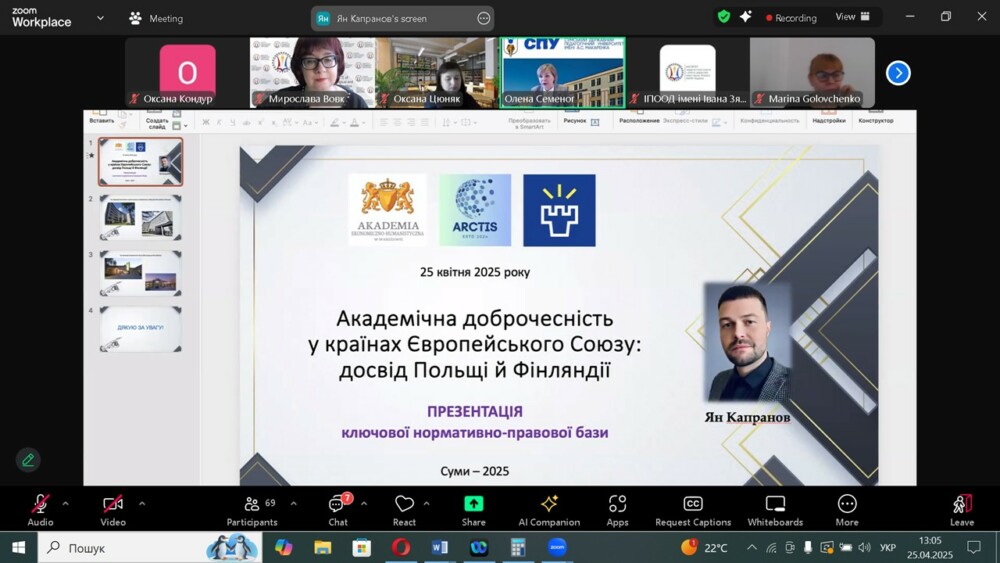
Jan Kapranov is a Doctor of Philology, Doctor of Habilitation (Linguistics), Professor at the University of Economics and Humanities in Warsaw (Warsaw, Poland).
The event was attended by PhD candidates from the educational and scientific programs “Professional Education” (guarantor Prof. O. P. Tsyunyak), “Educational and Pedagogical Sciences” (guarantor Prof. V. V. Stynska), Dean of the Faculty of Pedagogy Oksana Kondur, Head of the Department of Primary Education and Educational Innovations Ruslana Romanyshyn, as well as scientific and pedagogical workers and postgraduate students from different regions of Ukraine.
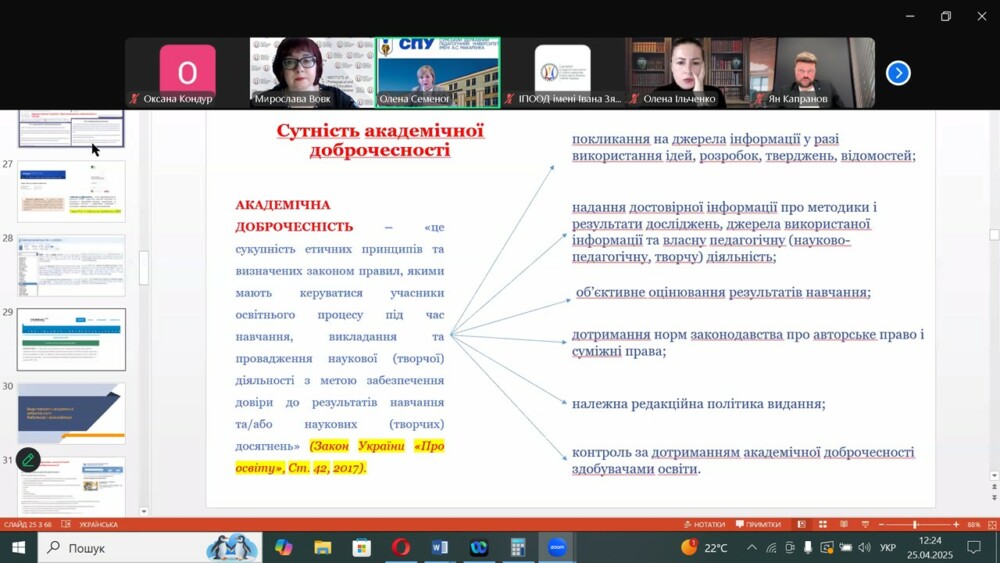
The polylogue lecture became a platform for discussing important issues of academic integrity, especially relevant in the context of the challenges of the information age. Professors Olena Semenog and Myroslava Vovk analyzed in detail the essence of the concepts of “academic integrity”, “scholar”, “scientist”, outlined modern challenges for a researcher in the era of digitalization. Particular attention was paid to the issues of preventing academic plagiarism, developing critical thinking skills, an ethical attitude to authorship and the use of modern digital tools to ensure the transparency of scientific activity. Practical aspects of observing the norms of integrity in scientific research were proposed and ways of forming an academic culture among young scientists were outlined.
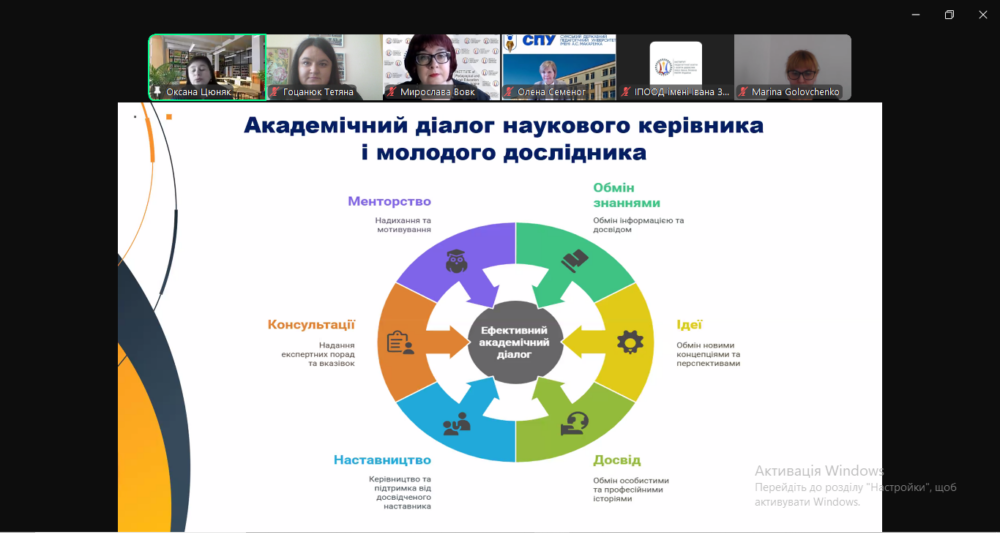
Oksana Tsiunyak highlighted the issue of academic integrity in scientific research as a set of ethical norms and practices that guarantee reliability, transparency, and respect for intellectual property. The professor noted that an important role in adhering to the principles of academic integrity is played by the academic dialogue between the scientific supervisor and the young scientist, which should be built on the principles of mutual respect, openness, trust, and constructive cooperation.
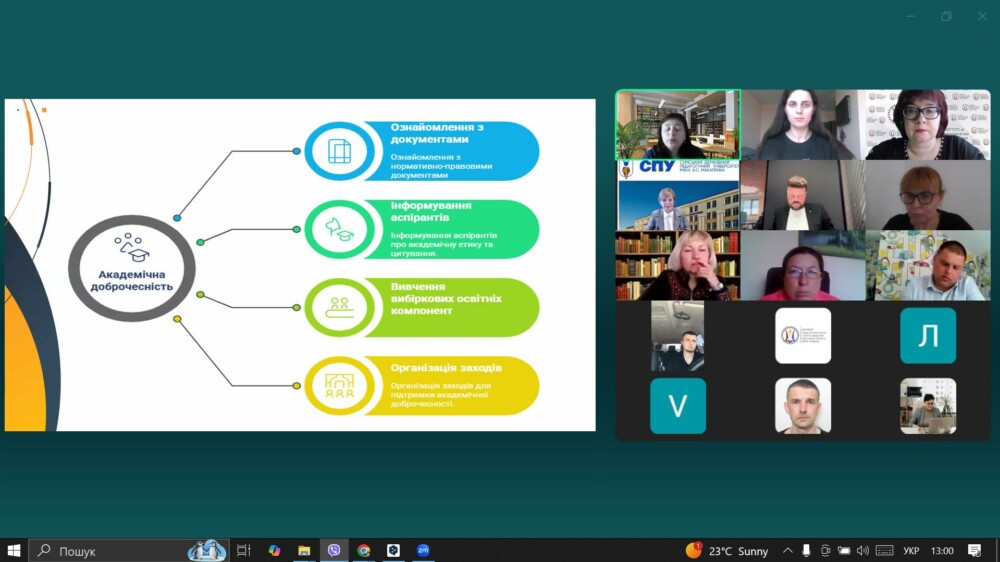
Oksana Petrivna also presented the experience of implementing the principles of academic integrity at the Vasyl Stefanyk Precarpathian National University. The “Guide for Postgraduate Students” (located on the university website) is useful for young researchers, as it not only helps to navigate the requirements and stages of obtaining a scientific degree, but also forms an idea of the academic culture, ethical standards and principles of responsible scientific activity.
“Ethical principles of mentoring, an honest attitude to research activities, adherence to citation standards, protection of the rights of experiment participants – all this creates a holistic system of values that forms not only a competent specialist, but also a responsible scientist with high moral standards. Our common goal is to form an academically honest educational environment that will contribute to the development of science, ensuring high standards of education, the development of the scientific community, and the establishment of academic integrity as the basis of modern education and science,” says Oksana Petrivna.
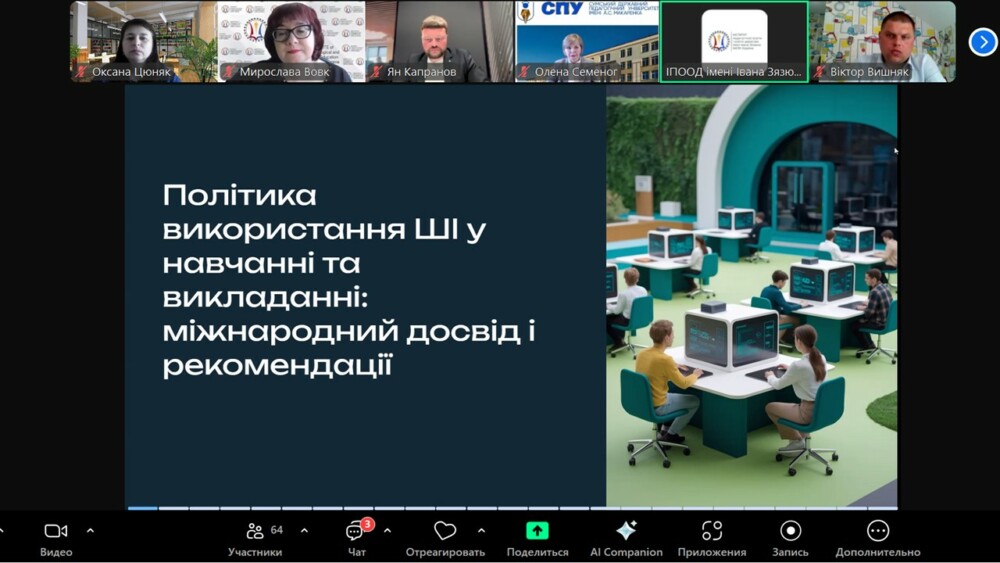
Kyryl Kotun introduced the audience to the policy of using artificial intelligence in education and teaching, presented international experience and recommendations. In his speech, he outlined the main international approaches to integrating AI into the educational process, identified key trends, challenges and opportunities that are opening up for higher education institutions. Particular attention was paid to the analysis of international experience in using AI in education, in particular, the principles of ethical use of technologies, the need to develop digital literacy among participants in the educational process and the importance of forming a responsible policy on the implementation of innovations.
Jan Kapranov presented the experience of Poland and Finland in implementing the principles of academic integrity. The presented international experience became an important guideline for further steps in the development of academic integrity in Ukraine.