Little information has survived about the monastery in the village of Rakovets, now in the Horodenkivsk City Council of the Kolomyia District. In the shematism of M. Kossak, the catalogs of I. Krypiakevych and R. Lukan, it is mentioned in connection with the revision of the abbots for 1724.
The Greek Catholic priest in Rakovets, Father Sofron Vytvytsky, in his “Historical Essay on the Hutsuls”, published in Lviv in 1863, mentioned that “in Rakovets on the Dniester, where traces of paint are still visible in the limestone rock above the hollowed-out bed, nuns also lived”. The monastery had a miraculous image of the Mother of God, painted by monks, which in the 17th century. got to the Rakovets Castle, and was later transferred to the parish church of St. Demetrius in Rakovets. The icon was renewed by the owner of Rakovets, Dvernitska. In 1848, the church burned down, the image of the Mother of God was lost in the fire. According to another legend, which existed in Rakovka as early as the middle of the 19th century, in a cave not far from the castle, in ancient times there lived a hermit who, for the sake of solitude, in the summertime would travel by boat along the Dniester River from the village of Monastyrka, near the village of Luky. Folk legends indicate that over the centuries the character of the cave monastery in Rakovka, due to various circumstances, could change – from male to female.
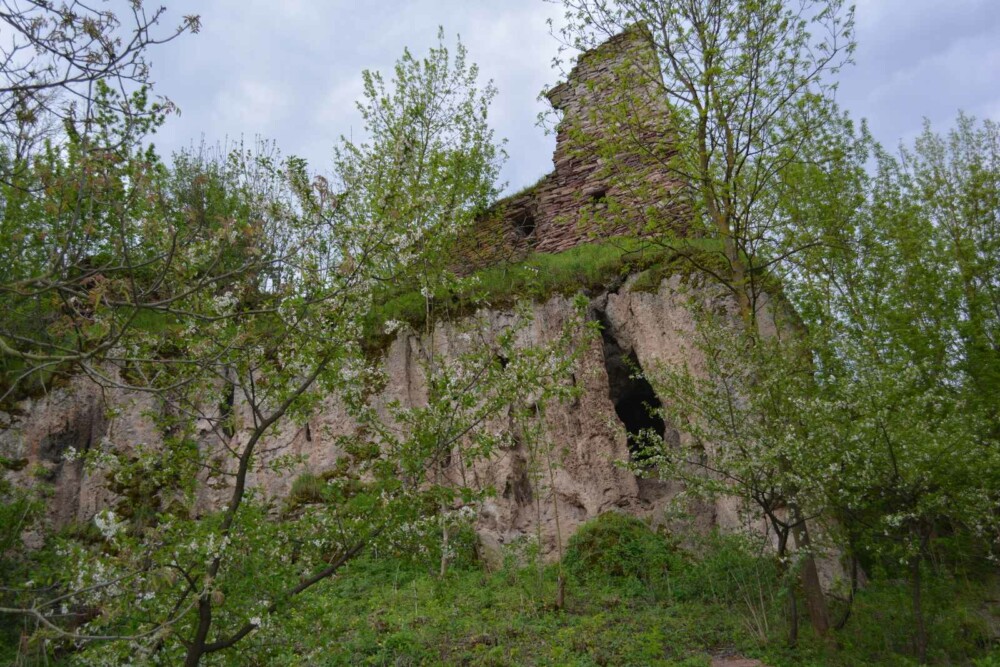
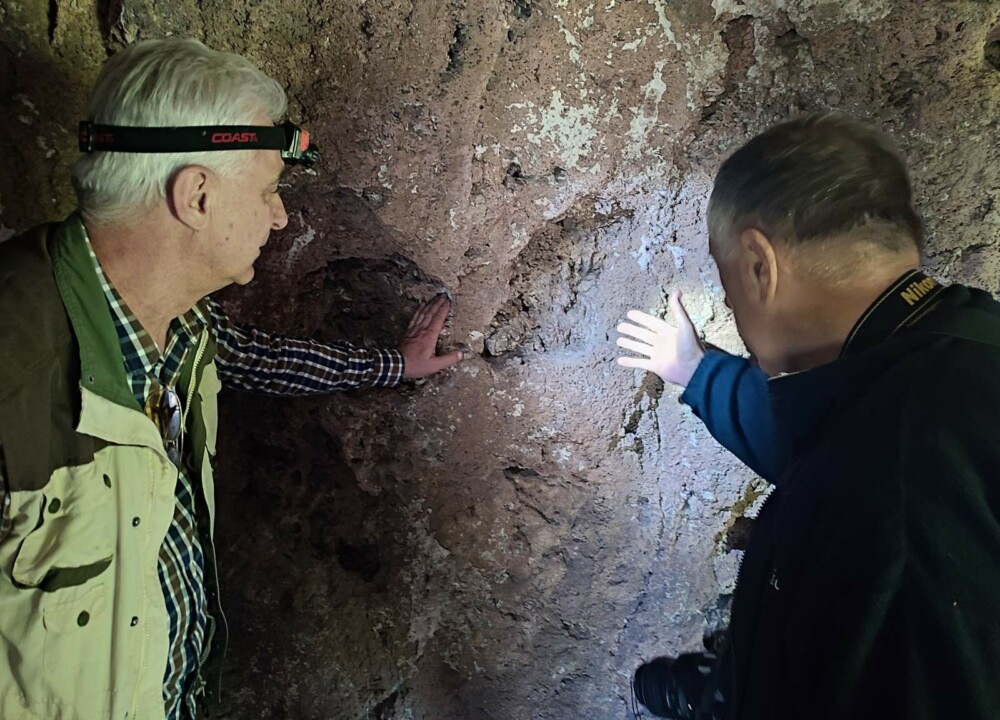
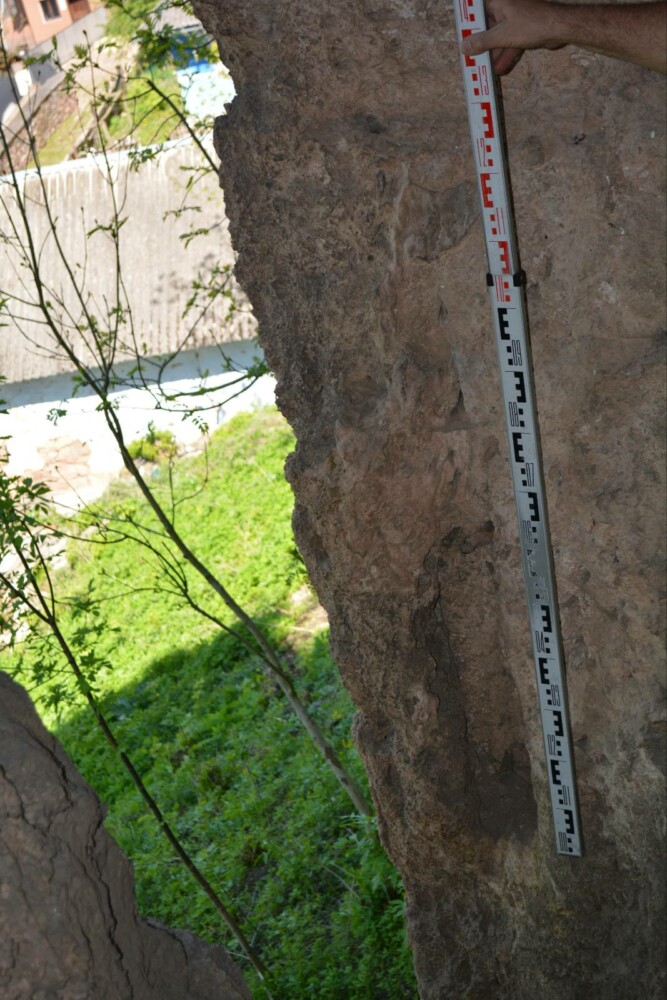
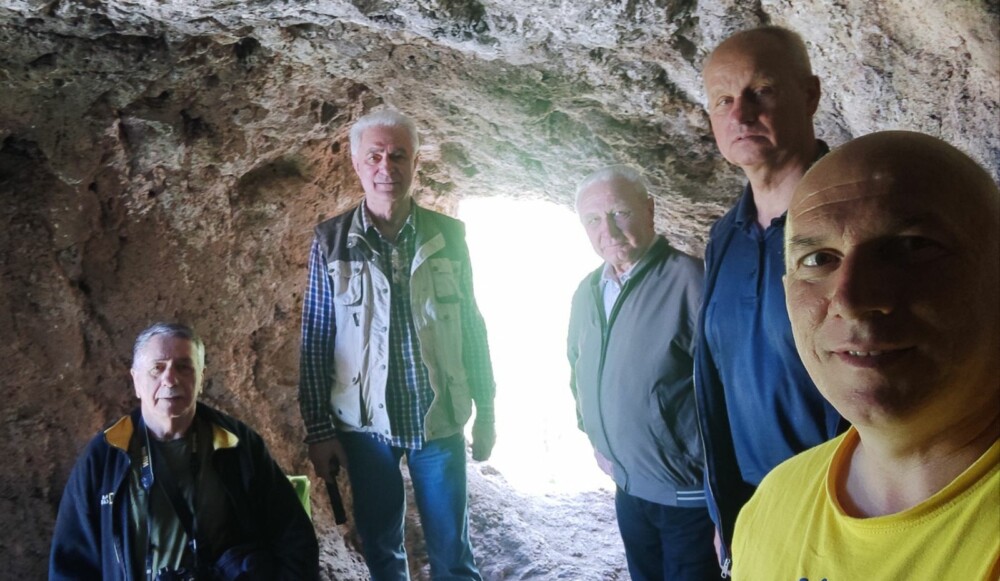
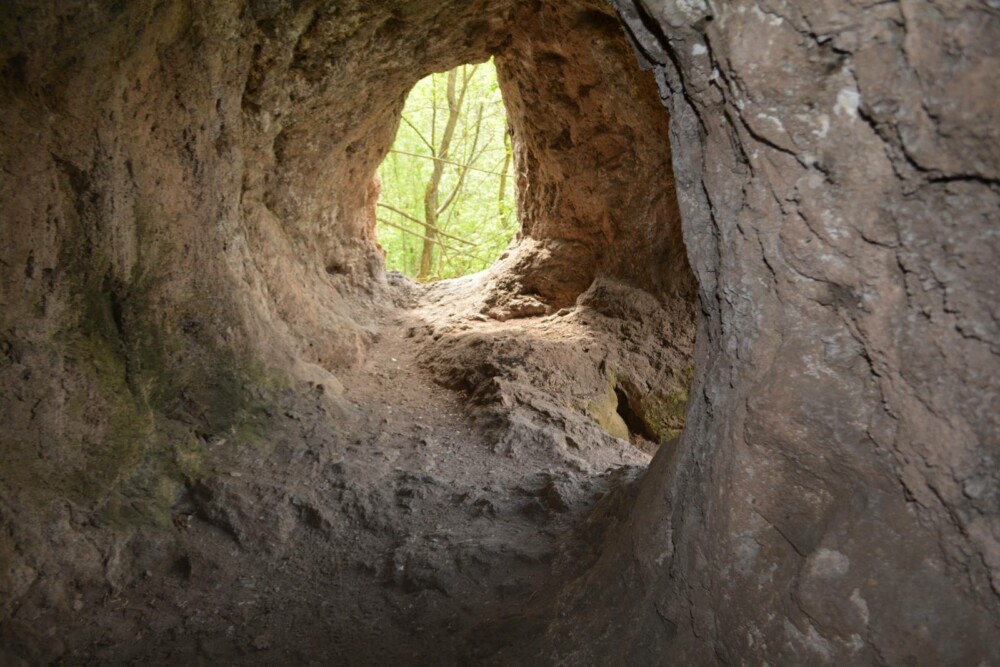
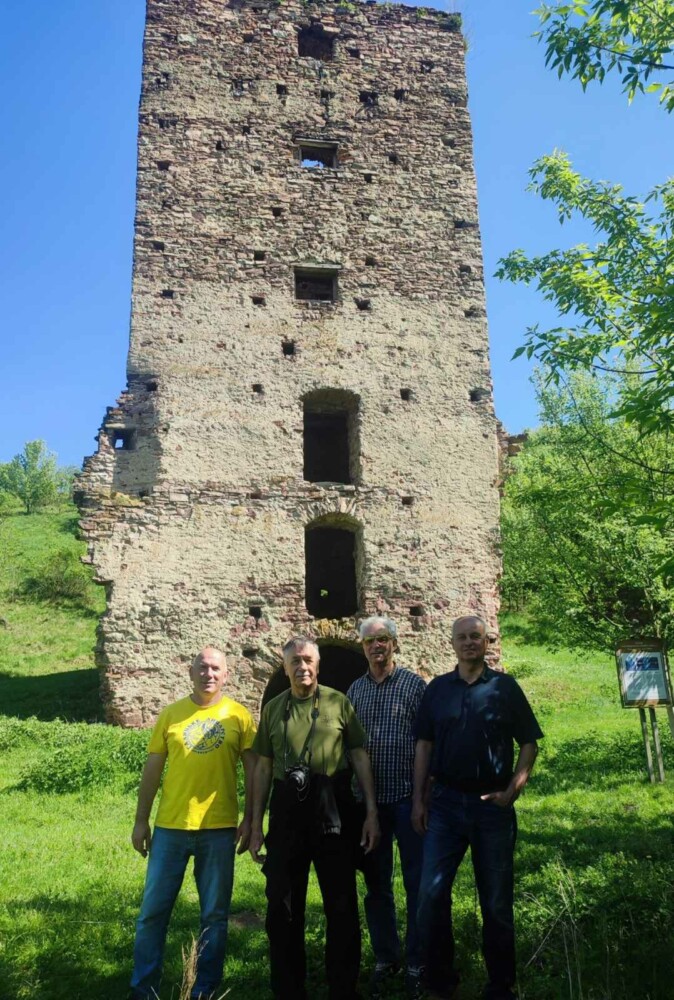
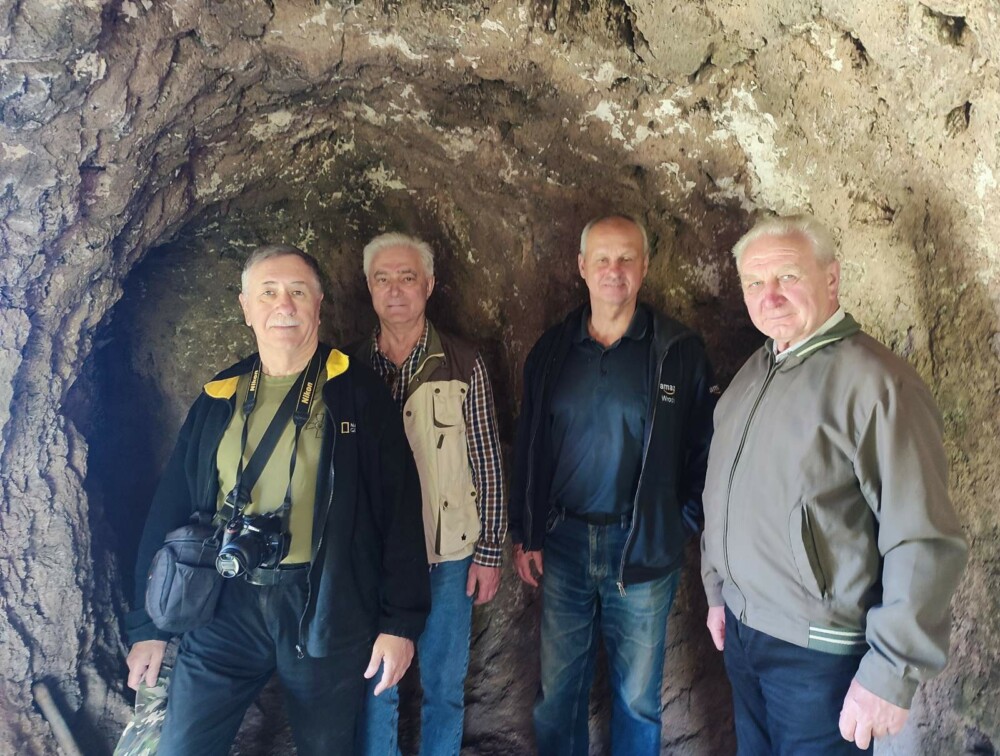
The cave was first examined by participants of the historical and archaeological expedition of the Institute of History, Ethnology and Archaeology of the Carpathians of the Vasyl Stefanyk Precarpathian (Carpathian) National University, consisting of Professor Mykola Kugutyak, Associate Professors Borys Khruslov and Mykhailo Moskalyuk, and specialist Roman Kobylnyk, with the participation of local historian Vasyl Fedak, in April 2025. The cave is located in the northwestern corner of the village called Rakovets-mysto, 80 m from the Dniester River. The entrance to the cave is from the northwest, its height is 2.5 m and 1 m wide. The vertical grooves-notches carved into the rock at the entrance reach 2.6 m. Wooden structures, fastened in the door grooves, blocked the entrance to the cave.
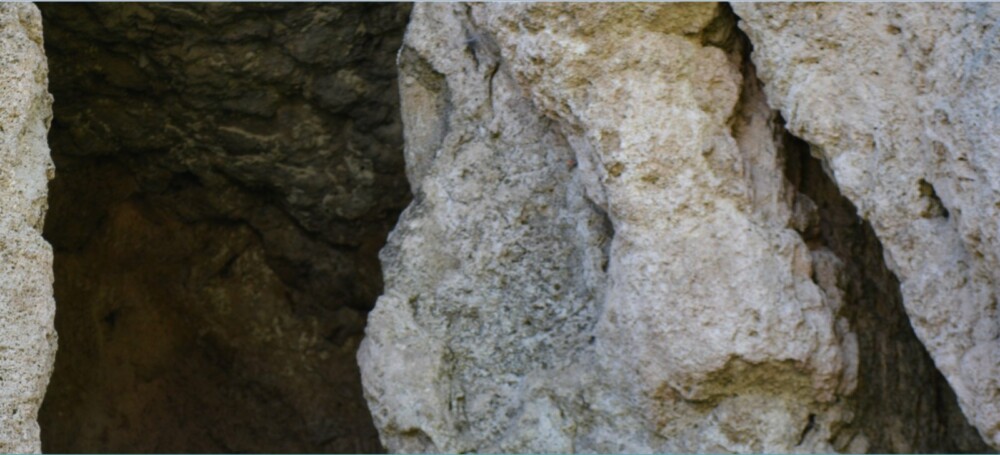
To the right of the entrance, at a height of 1.5 m, a rock sculpture bust was discovered, apparently of the Virgin Mary with a wreath on her head. To the left, at the same level, an image resembling an icon of the Blessed Virgin Mary with the Child Jesus was carved. The rock images could have been carved in the 16th – 17th centuries.
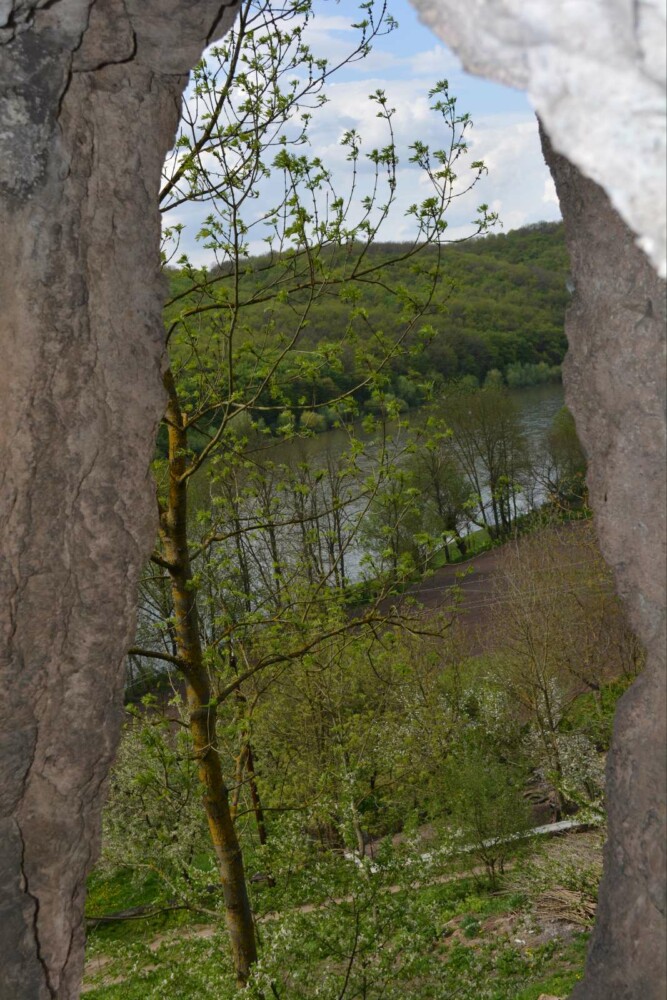
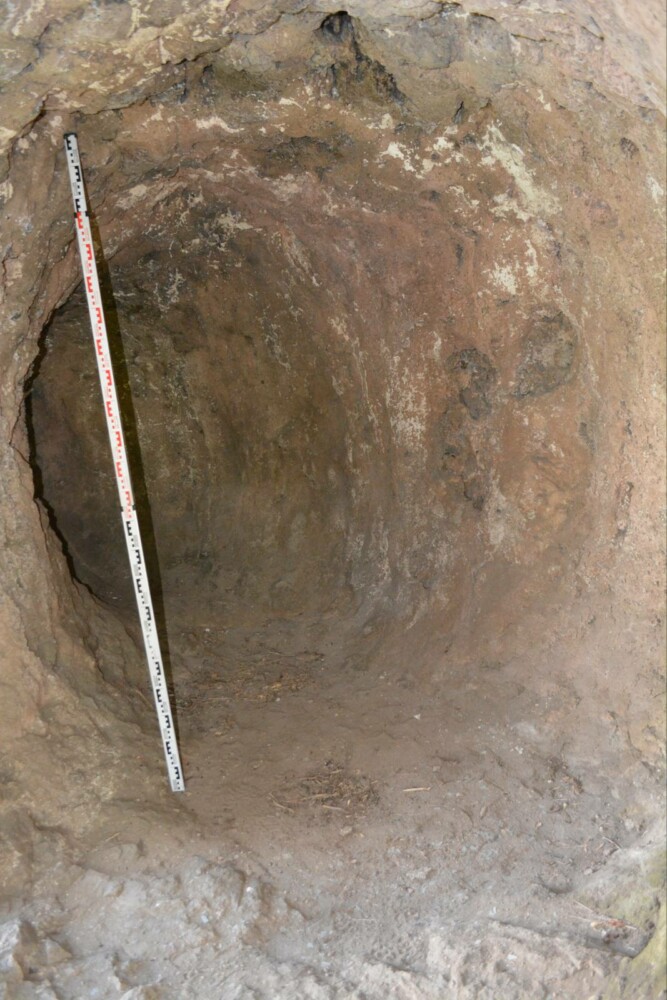
The cave is round in shape and is 6 m long from east to west. Its height is 2.3 m, its width in the central part is about 2.5 m. To the right of the entrance is a large window, 1 m wide and 1.2 m high, which was also covered. At the end of the cave is a small round window 0.2 m in diameter.
In the central part of the cave, which apparently played the role of a chapel where services were held, a rock graphic image was discovered on the left wall, which resembles the Monk Onuphrius next to a lion. Computer processing of the image made it possible to identify a number of crosses of various configurations. Based on a number of rock signs, there is reason to believe that the cave was carved in the pre-Christian period and was developed by monks in the Middle Ages.
Above the cave, fragments of the stone-lined wall of the 17th-century Rakovec Castle have been preserved, in the chapel of which there was a miraculous image of the Mother of God, later transferred to the parish stone church. In the magazine “Przyjacel ludu” for 1837, in the description of the Rakovec Castle by an unknown author, it is said that: “At the back of the castle, above the cliff, there stood a chapel with a wonderful icon of the Immaculate Virgin, which can still be seen in the Rakovec church.” The miraculous icon of the Mother of God in Rakovec is mentioned in the Marian catalog of the monk of the Catholic Capuchin order, Wenceslas of Sulgostów, “O cudownych obrazach w Polsce Przenajswietszej Matki Bozej”, published in Krakow in 1902. The castle chapel was dedicated to Saint Demetrius, as was the wooden church in Rakovec. The cave monastery apparently had a similar title.
The study of the history of the Rakovets Monastery is just beginning and requires further archeographic and archaeological study. The question remains open – in what form did the monastery exist, recorded in the audit of the abbots in 1724? The cave monastery itself, given the method of hollowing out the cuts with which the wooden door structures were fastened, and the technical features of the construction of the rock monastic monument, should be attributed to the 13th–14th centuries. A settlement of the same period was discovered in Rakovets (Rakovets III) in the tract Near the Castle in 1951 by an archaeological expedition of the Institute of Social Sciences in Lviv.